



5th of March, 2026
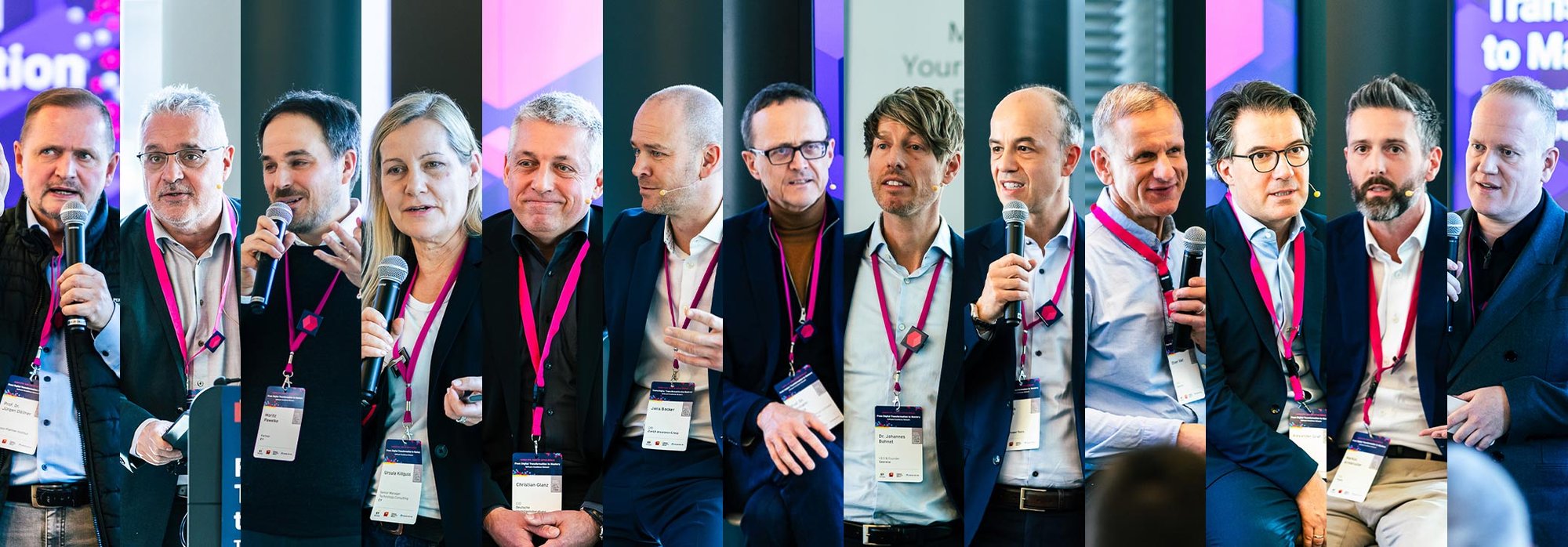
The Hasso Plattner Institute, EY, Seerene, and the German Deep Tech Group invited leading software executives and academics to the EY Germany office Berlin for a day of open dialogue, masterclasses, and strategy discussions on moving from digital transformation to mastery.
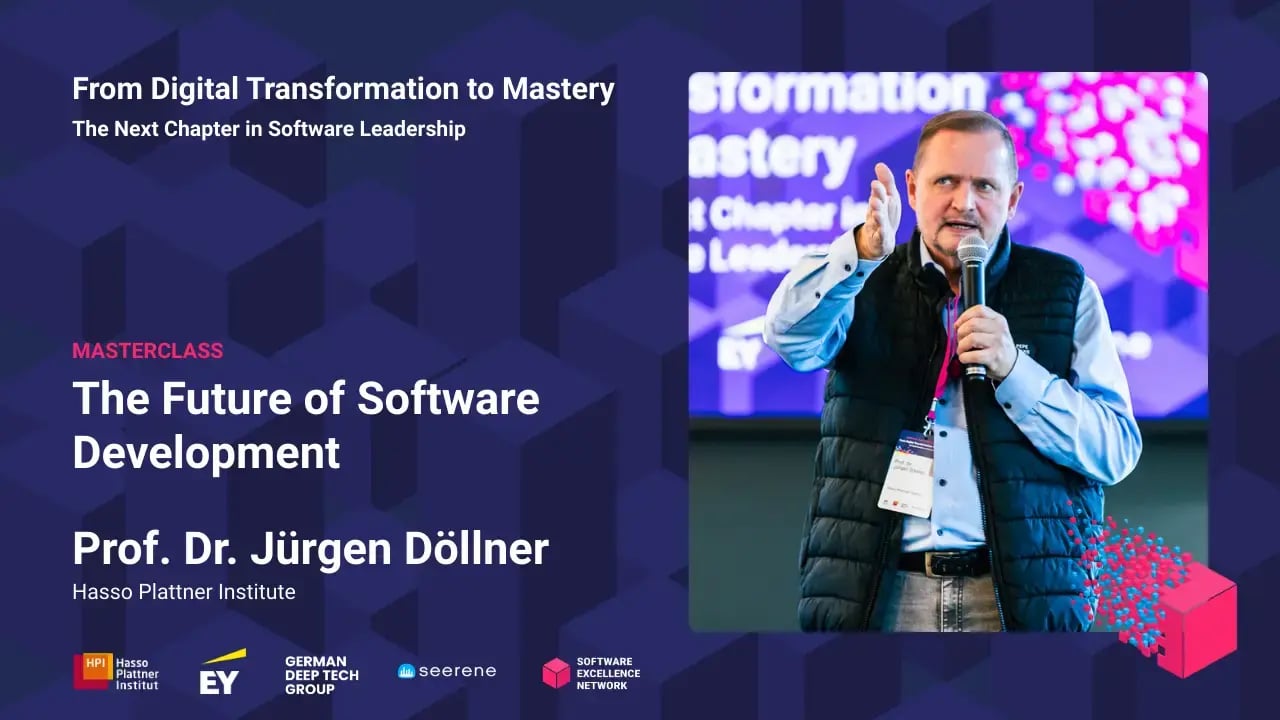
Speaker: Prof. Dr. Jürgen Döllner | Hasso Plattner Institute, Co-founder Seerene
Prof. Dr. Jürgen Döllner explains how software engineering is shifting from traditional coding to Specification Engineering. With AI and Large Language Models (LLMs) increasingly capable of interpreting and generating code, developers’ roles are moving from writing lines of code to defining requirements, specifying architecture, and validating outcomes.
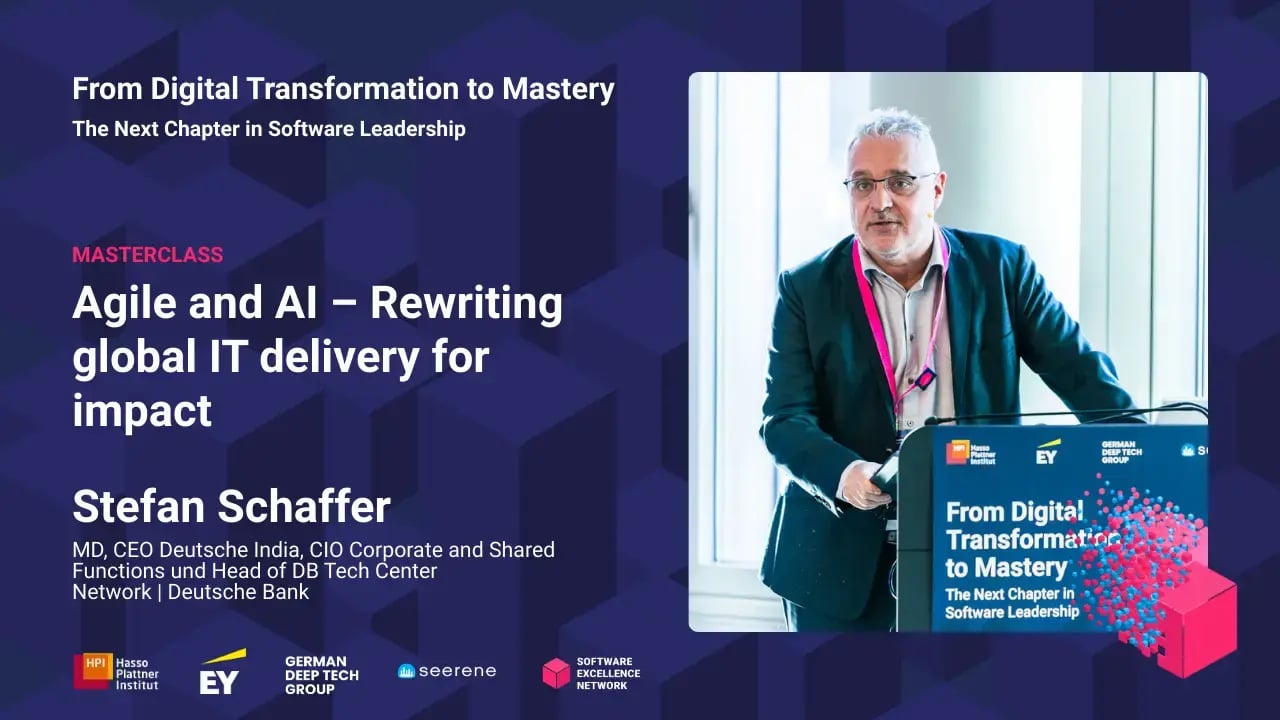
Speaker: Stefan Schaffer | MD, CEO Deutsche India, CIO Corporate and Shared Functions und Head of DB Tech Center Network | Deutsche Bank
Stefan Schaffer explains how Deutsche Bank combines Agile principles and AI to transform global IT delivery. Tech Centers accelerate innovation through iterative cycles, team autonomy, and AI-driven rapid prototyping.
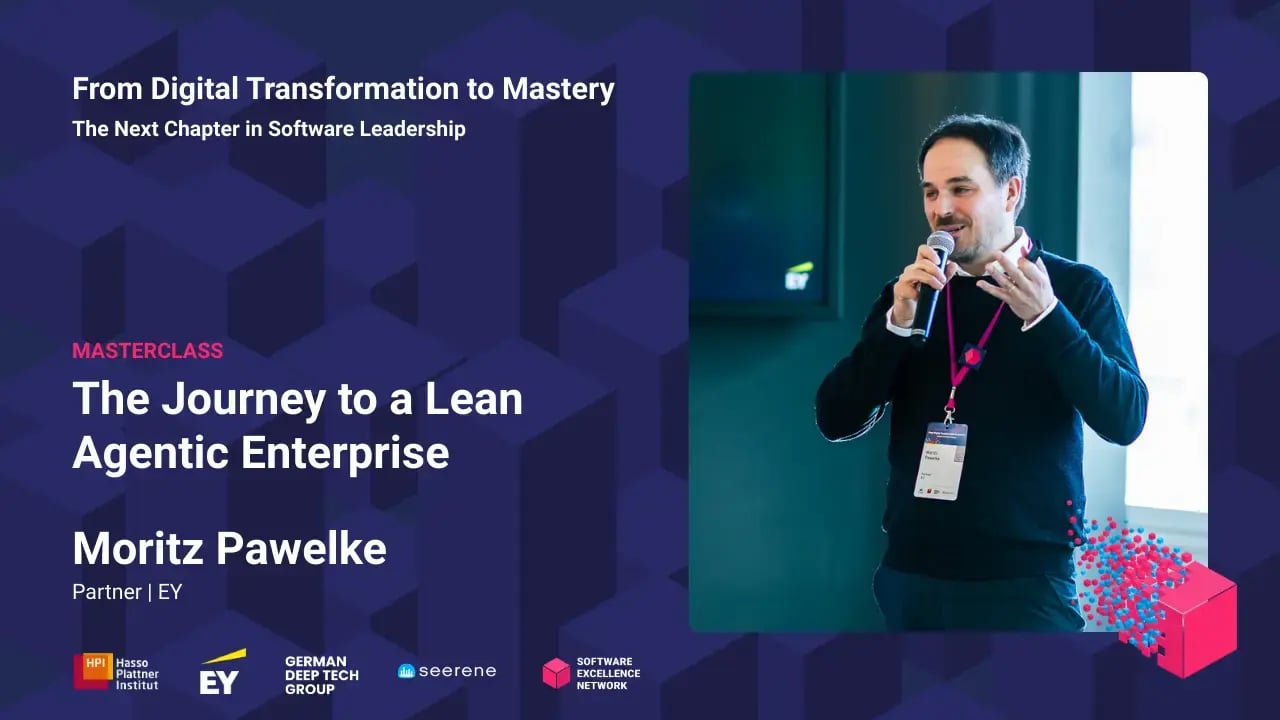
Speaker: Moritz Pawelke | Partner | EY
Moritz Pawelke explores the shift from using AI to optimize existing processes toward building fully agentic enterprises, where autonomous AI agents act directly on data and business logic rather than through traditional user interfaces.
This transformation will significantly reshape knowledge work in areas such as finance, legal, and compliance, while requiring a new data foundation built on autonomous, semantically structured data products. Pawelke also highlights emerging operating models like outcome-based “Actions as a Service” and the evolving role of humans as designers of rules, semantics, and governance for AI-driven organizations.
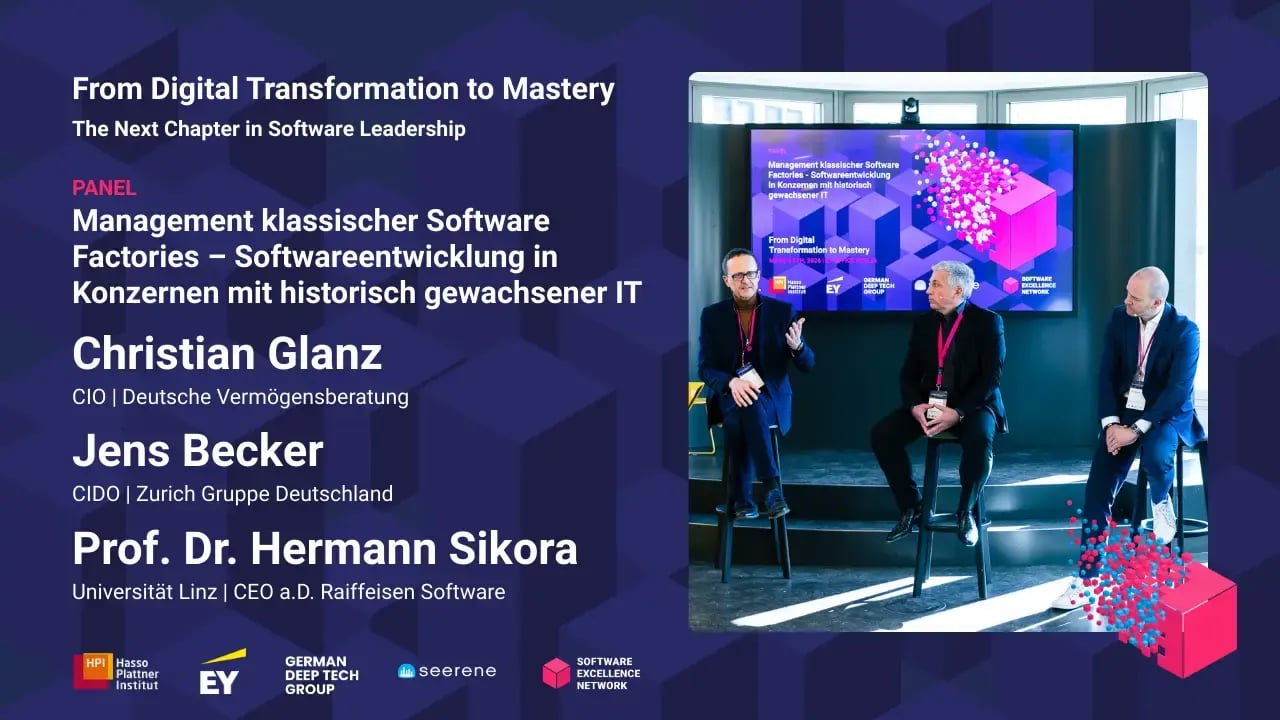
Speaker:
Christian Glanz | CIO, Deutsche Vermögensberatung
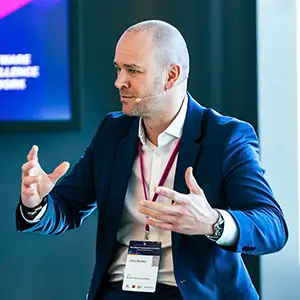
Jens Becker | CIDO, Zurich Gruppe Deutschland
Prof. Dr. Hermann Sikora | Universität Linz, CEO a.D., Raiffeisen Software
Moderator: Oliver Viel | CMO, German Deep Tech Group
In this panel from “From Digital Transformation to Mastery,” industry leaders explore the future of software factories in enterprises with historically grown IT systems. The discussion covers the shift from legacy mainframes to standardized platforms, the transformative role of AI in software development and code migration, and the organizational challenges of adopting new tools and processes. Panelists also address strategic risks, including reliance on global tech providers and rising license costs, offering insights for technology leaders balancing innovation, efficiency, and risk management.
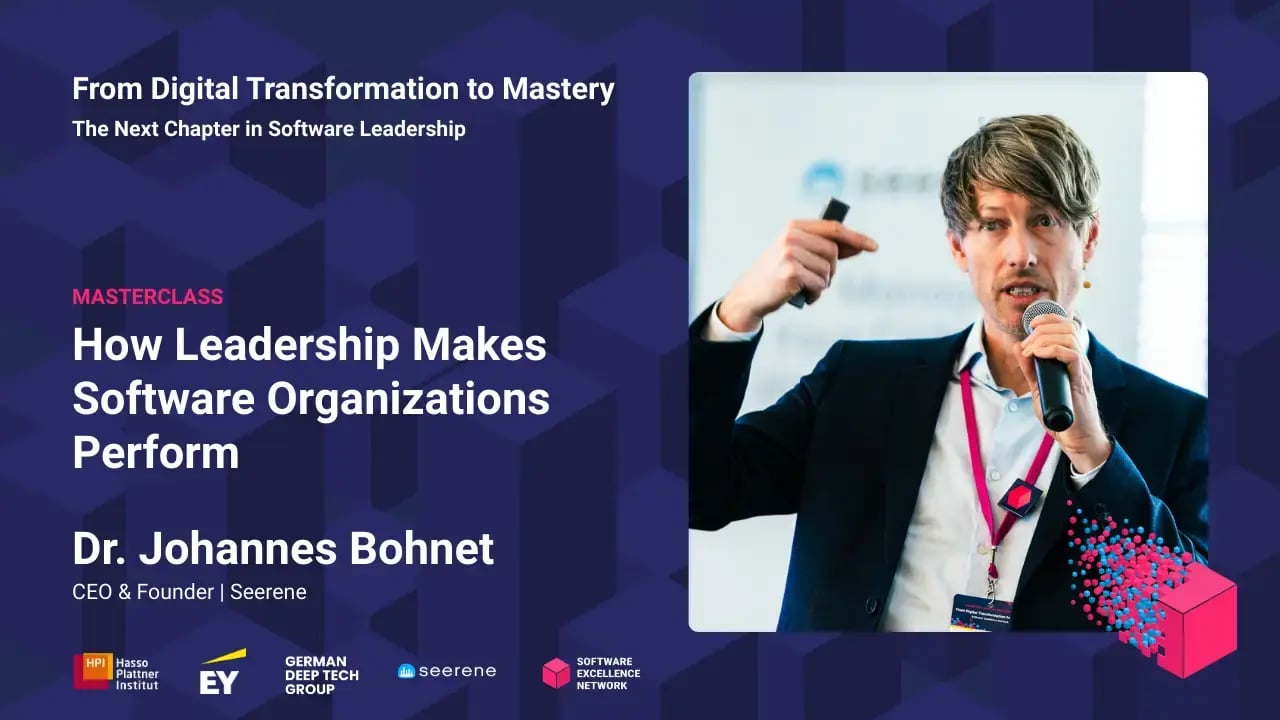
Speaker: Dr. Johannes Bohnet | CEO & Founder | Seerene
Dr. Johannes Bohnet explains why software development must be treated as a strategic capability, especially in the age of AI. While AI can boost productivity, it also amplifies inefficiencies in teams lacking transparency, often leading to “watermelon reporting,” where problems are hidden from management.
Using data-driven insights from development tools, organizations can identify inefficiencies, reduce technical complexity, and measure real value creation while ensuring privacy and compliance. Bohnet also discusses how AI shifts developers toward specification engineering and highlights the critical role of leadership: small, regular reviews of engineering KPIs can drive continuous improvement across the organization.
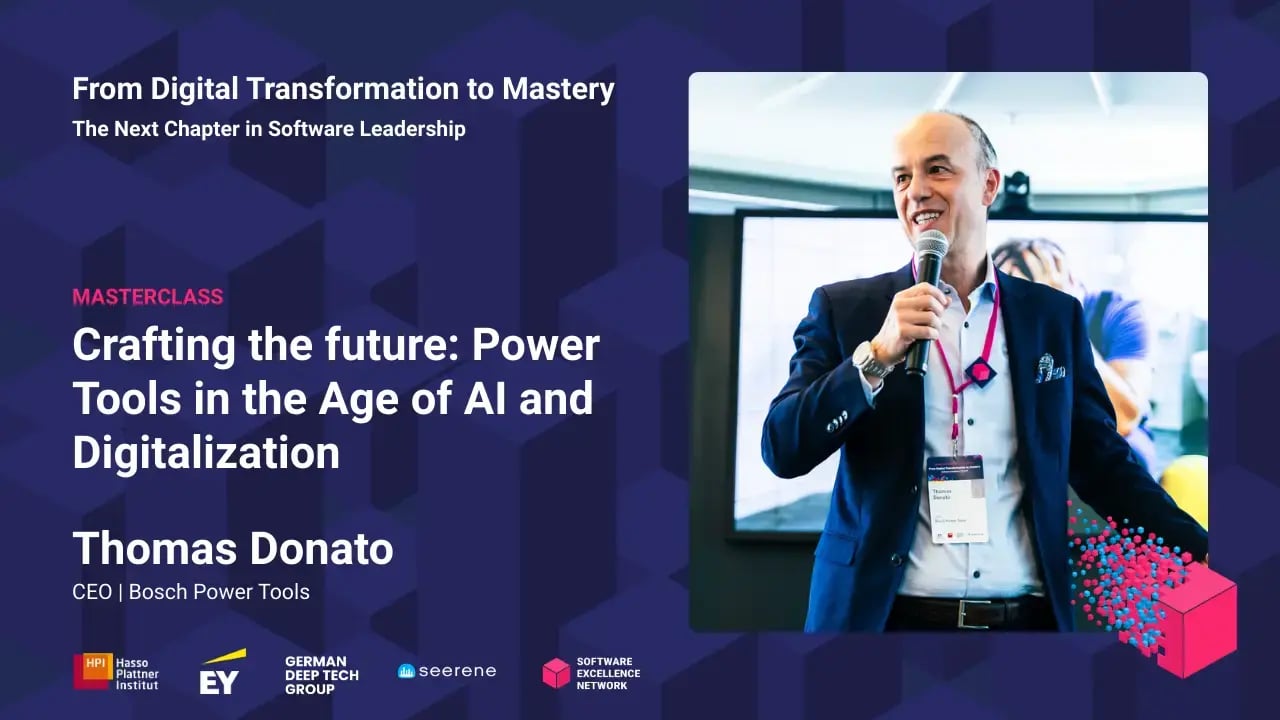
Speaker: Thomas Donato | CEO | Bosch Power Tools
Thomas Donato explores how Bosch Power Tools leverages AI and digitalization to enhance productivity, customer experience, and business value. From intelligent wall sensors and AI-driven customer service to internal software development and efficiency improvements in sales, Donato highlights practical examples of integrating AI into everyday business processes while aligning investments with strategic priorities.
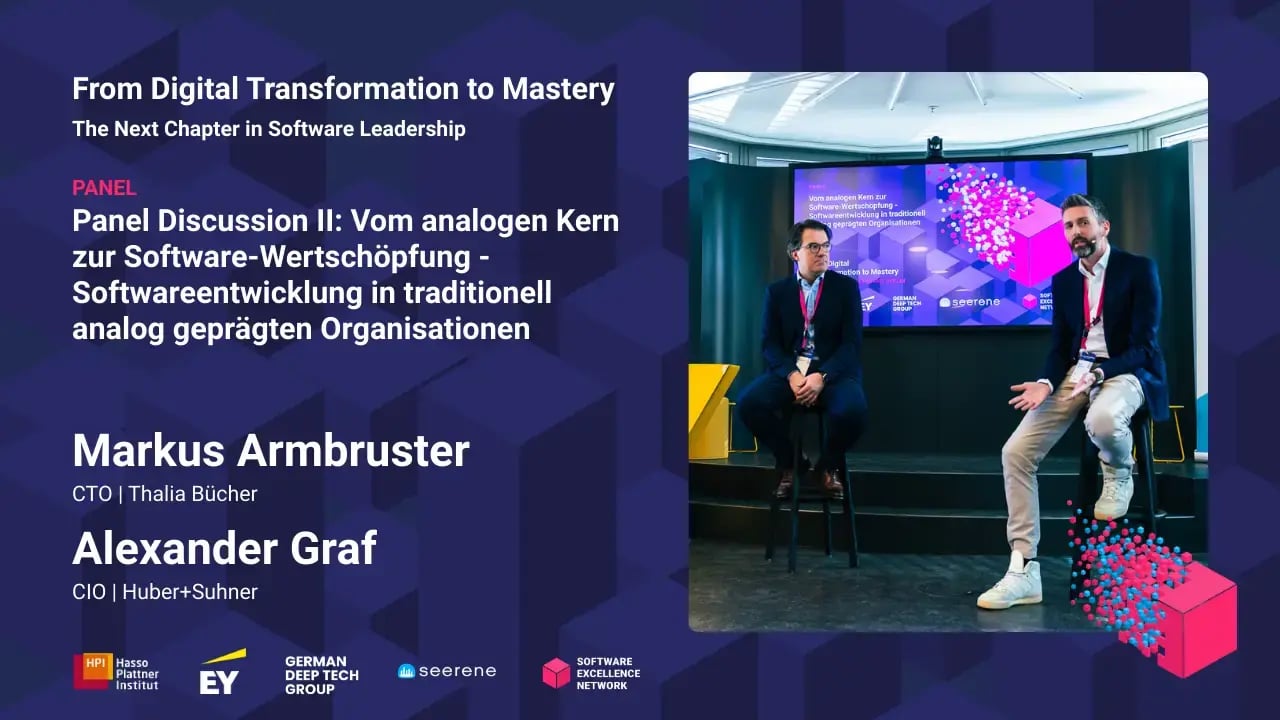
Speaker:
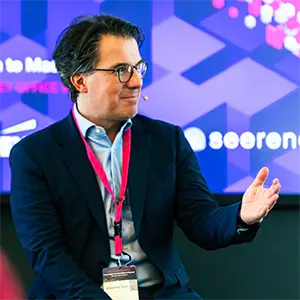
Markus Armbruster | CTO | Thalia Bücher
Alexander Graf | CIO | Huber+Suhner
Moderator: Oliver Viel | CMO | German Deep Tech Group
This panel explores how large enterprises with legacy IT systems are integrating AI and digital transformation into their operations. Experts share insights from diverse industries—financial services, insurance, and industrial engineering—highlighting how AI is reshaping workflows, improving efficiency, and redefining human roles toward quality assurance, architecture, and exception handling.
„Wir, die meisten von uns hier in Führungspositionen, tragen eine besondere Verantwortung. Wir sind verantwortlich für unsere Shareholder, unsere Kunden und vor allem auch für unsere Mitarbeiter. Das bedeutet, dass wir unseren Teams Entwicklungsmöglichkeiten aufzeigen müssen. Gleichzeitig muss man aber auch ehrlich sagen: In der Fertigung ist es nun mal so, dass bei der Automatisierung von Produktionslinien viele Jobs wegfallen. Das ist leider die Realität.“






August-Bebel-Str. 26-53
14482 Potsdam, Germany
hello@seerene.com
+49 (0) 331 706 234 0
Generative AI Seerene GmbH
August-Bebel-Str. 26-53
14482 Potsdam, Germany
hello@seerene.com
+49 331 7062340